
Why AI Founders Are Ditching Y Combinator: The $500K That's No Longer Worth 7% Equity
The accelerator that birthed billion-dollar companies can't crack AI's biggest wave, and smart founders are building anyway

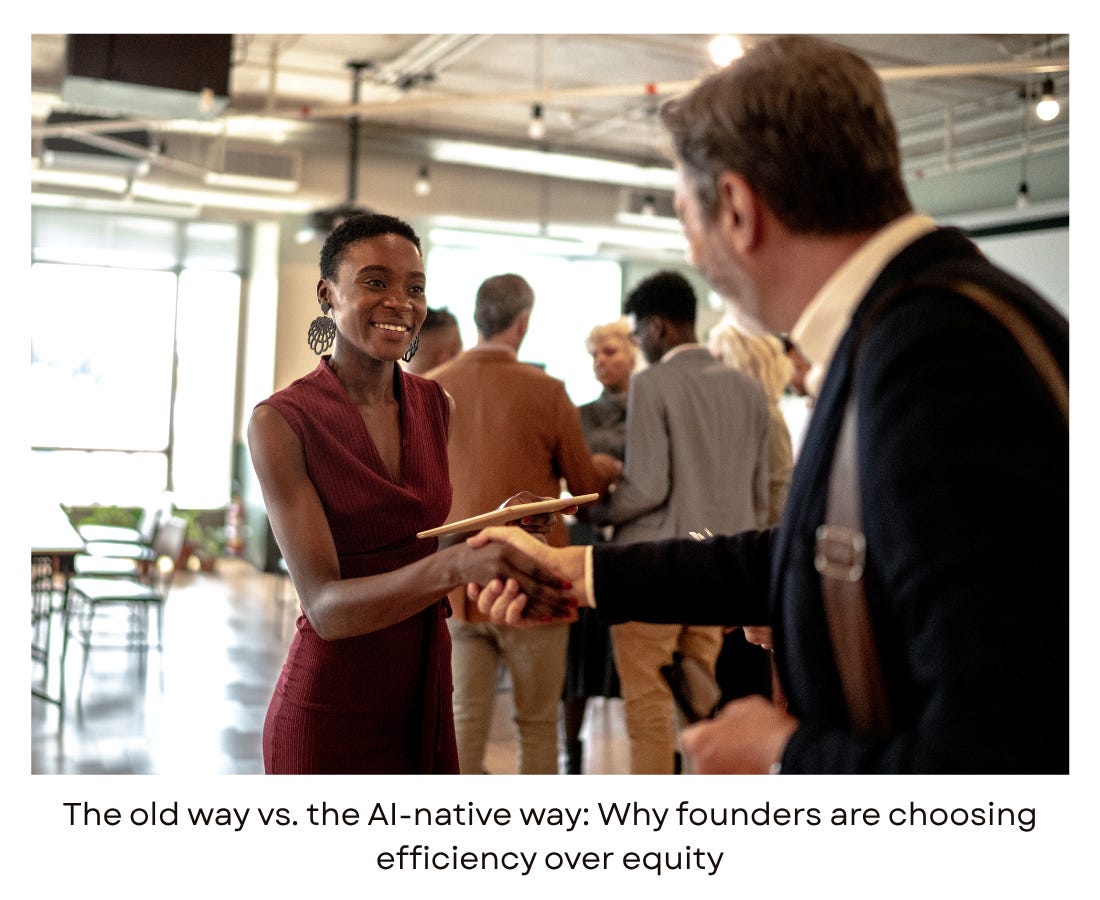
Of the 65 new US unicorns minted in 2024, AI companies led the surge. xAI hit $24 billion, Perplexity reached $9 billion, and Physical Intelligence achieved $2.4 billion—all in record time. But here's the data point that should make every founder pause: Y Combinator, despite backing 67 total unicorns, hasn't produced a single GenAI unicorn since transformers emerged in 2018.
The math is stark. Forty-six percent of YC's latest batch were AI companies—roughly 67 startups in a single cohort. If YC's historical 4.5% unicorn rate held, 3-4 should become billion-dollar companies. Yet while 60% of new 2024 unicorns were GenAI startups according to VC firm Accel, none came through the program that launched Airbnb, Stripe, and Dropbox.
This isn't founder failure. YC's current batch is growing 10% week-over-week, maybe the fastest in their history. The problem runs deeper: AI has broken the accelerator model itself.
Why $500K Can't Compete with $100M AI Training Budgets
OpenAI launched with $1 billion in 2015 and reached its current $300 billion valuation through massive subsequent funding rounds, not traditional accelerator progression. The outlier became the template.
Infrastructure plays require different economics. The AI sector captured over $100 billion in global venture capital in 2024. That is nearly double the $55.6 billion raised in 2023. When foundation models require hundreds of millions just to train competitively, YC's $500K barely covers GPU costs for a month.
"The capital intensity of frontier AI development has fundamentally changed the game," explains Jeffrey Bussgang, General Partner at Flybridge Capital Partners and author of The Experimentation Machine. "Founders who use AI will replace founders who don't - but that doesn't mean they need traditional accelerators to get there."
The app layer problem cuts deeper. Most YC AI companies build "ChatGPT for X" applications. In YC's Winter 2023 batch alone, four different startups explicitly called themselves "ChatGPT for" something. While these may generate revenue, they're vulnerable to being replicated by foundation model companies in weeks.
The real disruption isn't happening in accelerator cohorts. This year's major AI unicorns all bypassed the traditional path entirely.: xAI ($50B), Anthropic ($5B+ valuation), Safe Superintelligence ($5B).
How AI Obliterates Traditional Startup Economics
The accelerator model made sense in 2009. Building web applications required teams of 10-50 engineers, months of development cycles, and complex infrastructure. Founders needed networks, mentorship, and credibility. Trading 7% equity for these resources felt reasonable.
AI destroys this equation. For a quarter of YC's current startups, 95% of their code was written by AI. Companies are reaching $10M revenue with teams under 10 people.
"Startups that can bootstrap longer and reach significant traction before seeking external funding are in a position to demand better terms, fundamentally shifting the balance of power in investor-founder relationships," notes a recent World Economic Forum analysis on AI-native startups.
Consider the new math: If AI generates 95% of your codebase, automates customer support, handles initial marketing copy, and manages basic operations, what exactly justifies giving up 7% of a potential billion-dollar company?
Traditional accelerator value propositions are crumbling:
Network effects? AI tools like PitchBob can generate complete pitch decks and business plans, while platforms provide direct access to investor databases
Validation? Users validate product-market fit faster than any Demo Day audience
Mentorship? Advanced AI provides 24/7 strategic guidance and can simulate customer feedback at scale
Brand recognition? Direct-to-consumer distribution beats insider credibility when your product can reach millions immediately
The New Playbook: Bootstrap Longer, Scale Faster
Smart founders are already adapting. "Bootstrapping an AI startup from the ground up is a matter of talent, access to open source AI resources, and clever corporate governance," explains one analysis of AI startup funding strategies.
Leverage AI for self-sufficiency:
AI can help startups "learn and grow faster by simulating customers, scaling up marketing content, and analyzing feedback" according to Harvard Business School research. This eliminates the need for large teams and extensive mentor networks.
Reduce capital requirements dramatically. With AI-native startups proving more "capital-efficient" and reaching "revenue milestones faster," founders can maintain control longer and negotiate from strength.
Access global talent instantly. While "access to top AI talent remains concentrated in a few global hubs," AI tools democratize many functions previously requiring specialized expertise.
Build better products with AI assistance. Modern AI tools enable "real-time customer research, comprehensive market analysis, and personalized experiences that would have required entire teams just three years ago".
What the Data Says About AI-First Companies
The numbers validate this approach. AI companies are "achieving unicorn status at an accelerated pace," taking just 3.6 years to exceed $1 billion compared to traditional startups.
In 2023, one in five new billion-dollar startups were AI companies, collectively adding $21 billion in value. By 2024, this jumped to AI companies representing the majority of new unicorns.
Even venture capitalists acknowledge the shift. "Some founders may opt to stick with bootstrapping over getting investment funding in exchange for equity in the company" as AI reduces resource requirements.
The Uncomfortable Truth About Pattern Recognition
Y Combinator built its reputation on recognizing patterns and scaling winners. But AI business development isn't following old patterns, it's creating entirely new ones.
The infrastructure layer requires massive capital. Foundation model companies need hundreds of millions for compute, talent, and training data. YC's model can't compete with sovereign wealth funds and tech giants writing $10 billion checks.
The application layer moves too fast for cohort models. Given "the speed at which AI is evolving, being close to where the innovation is happening matters more than ever", and that innovation happens in real-time on GitHub, not in 12-week programs.
The talent pool is globally distributed but highly specialized. While San Francisco remains the "epicenter" for top AI talent, exceptional teams are emerging globally, often outside traditional accelerator networks.
Counter-Argument: Why Some Founders Still Choose Accelerators
To be fair, accelerators aren't obsolete for all AI startups. Corporate-sponsored programs like Microsoft for Startups provide up to $150,000 in Azure credits plus technical advisory. That is certainly valuable for AI companies needing compute resources.
YC still offers credibility and network effects for B2B startups targeting enterprise customers. The brand recognition can accelerate sales cycles and investor meetings.
But for purely AI-native companies building consumer or prosumer products, the trade-off increasingly favors independence.
Your Strategic Decision Framework
Before applying to any accelerator, run this calculation:
The Equity Cost: 7% of a $1 billion unicorn = $70 million YC's Package: $500K + network + mentorship + credibility AI Alternative: $500K in personal savings + $2K/month in AI tools + direct investor outreach
AI tools can now "comb through so much data on the startup, competitors, the target audience, and the market as a whole, allowing startups to paint a complete picture and clearer future predictions" for investor pitches.
The math only works if YC's network generates more than $69.5 million in additional value. For most AI startups, that's questionable.
The Path Forward
The companies defining AI's future didn't need accelerator permission, companies like Cursor, Lovable, Midjourney, HeyGen took vision and translated that into action and the courage to build something genuinely new.
The accelerator model will adapt or decline. YC has already shifted strategy, reducing batch sizes and launching specialized AI programs. But they're playing catch-up to a fundamentally changed landscape.
Smart founders won't wait for adaptation. With AI startups achieving billion-dollar valuations in median timeframes of just 2-3 years, every month spent in traditional programs represents opportunity cost.
The question isn't whether or not to use AI. It's whether to let it make you independent. Use AI for customer research, product development, marketing automation, and investor outreach. Build product-market fit faster than any accelerator cohort ever could.
Take Action Now
Stop optimizing for accelerator acceptance. Start building immediately.
Your new playbook:
Use AI as your technical co-founder for rapid prototyping and development
Bootstrap longer with AI efficiency to maintain control and negotiate from strength
Access global markets directly through AI-powered translation and localization
Build comprehensive investor materials using AI research and analysis tools
Scale customer acquisition through AI-driven content and outreach automation
The fastest-growing startup batch in YC history is using AI to achieve 10% weekly growth. Imagine what you could achieve without giving up 7% equity for the privilege.
The AI revolution is here. The only question is whether you'll build on your terms or someone else's.
Ready to Build Category-Changing Software?
If you're convinced that the AI-first path is right for your startup, you don't have to go it alone. At Cameo Labs, we help founders and product teams build category-changing software in half the time—using the same AI-native approaches that are making accelerators obsolete.
While other founders are filling out YC applications, our partners are shipping products, acquiring customers, and proving product-market fit. We've helped AI-native startups reduce development cycles from months to weeks while maintaining the quality and scalability needed for billion-dollar outcomes.
The tools are available, the market is massive, and your AI-powered competitors aren't waiting for Demo Day. Neither should you.